
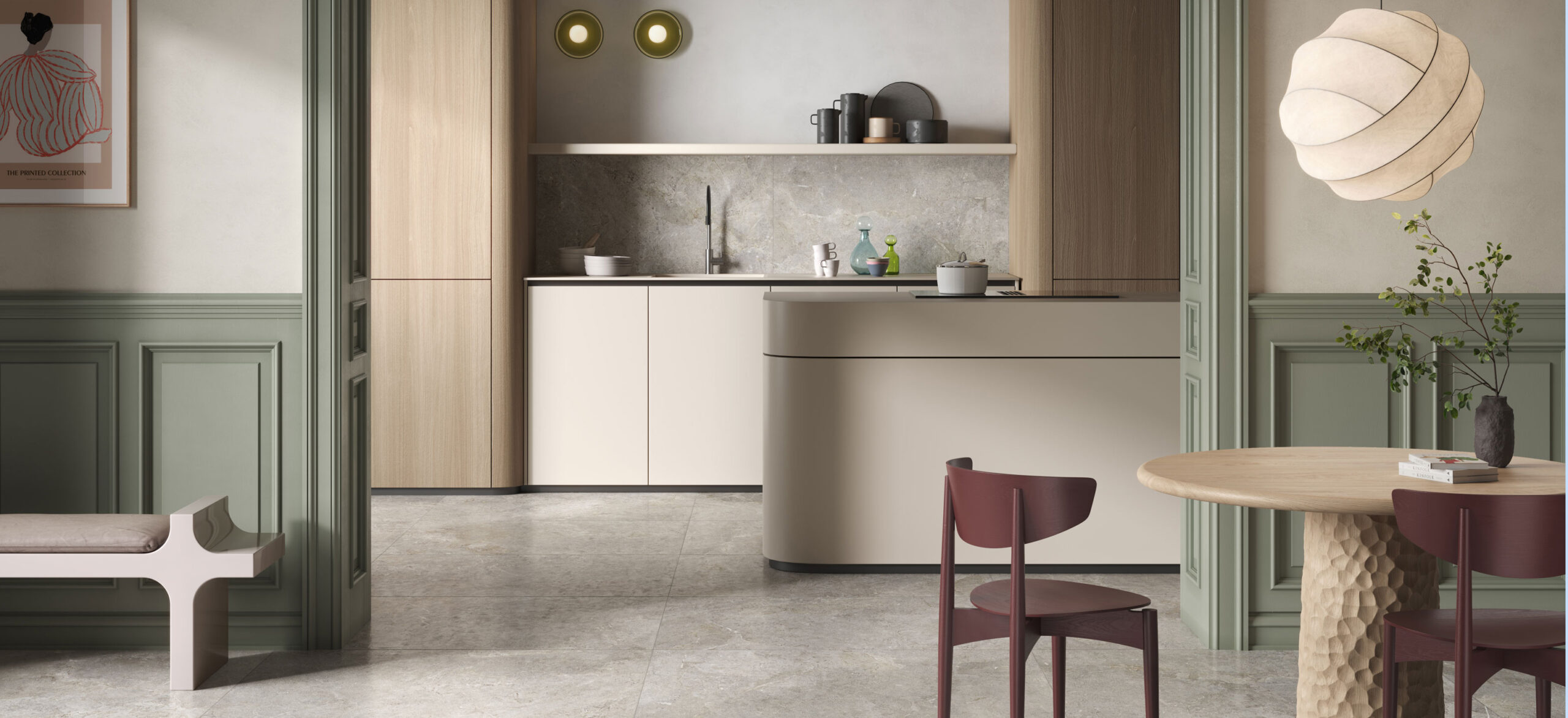
3D Kitchen 2025: curved models, natural materials, and design that anticipates the future
In the interior design landscape, kitchens are undergoing a transformation in which aesthetics, functionality, and materiality intertwine in increasingly sophisticated ways.
The trends emerging from leading publications such as Livingetc, AD Italia and Scavolini Magazine are not mere theoretical exercises: for us, they become practical guidelines that inspire every choice in our 3D visualization projects for the ceramic sector.
Read the Livingetc article
We’ve reinterpreted them in 3D

24_353_FMG_Select_Patagonia_Balance_LightGrey_Kitchen

24_353_FMG_Select_Calacatta_CalacattaBlack_Dining_Kitchen

24_101_Abitare_Phorma_Fumo_Cucina

24_221_Cercom_Everstone_Cream_Cucina

23_376_Verde_1999_StoneInstinct_Bronzo_Cucina

25_168_Sintesi_Trevi_Beige_Kitchen_Living_Dett

25_168_Sintesi_Trevi_Beige_Kitchen_Living
Our method: how we translate trends into 3D
For us, rendering is not just about aesthetics: it’s a persuasive tool, a prerequisite for effective dialogue between designer, ceramic company, and end client.
-
Consistency with trends
We don’t follow fleeting fashions: we start from established and recurring inspirations (curves, natural palettes, material ceramics), taken from recognized sources such as Livingetc, AD Italia, and Scavolini, and we translate them with technical precision. -
Credibility for the ceramic world
Rendering is not “free art”: every tile, size, and finish can be traced back to a real catalog. The client should be able to say, “That project could become reality tomorrow morning.” -
Added value for interior clients
Through carefully curated and contextualized scenes, we turn the concept of “Kitchen 2025” into clear images, even for non-technical audiences (architects, end clients). This elevates the perception of a ceramic project from “material” to “environmental sculpture.” -
Flexibility and customization
Even when following clear guidelines, we always leave room for variations (alternative textures, colors, special finishes). During the review phase, we can introduce accents — such as a decorative ceramic element or a subtle pattern — without compromising coherence.
If you haven’t yet, read our report on Milan Design Week 2025


